
Last updated July 2026 — refreshed for current tool versions and browser-based options.
"Android emulator online" is one of the most-searched emulator queries, and it splits into two very different needs. Some people want a real online, browser-based emulator they can open on any laptop or Chromebook with nothing to install. Others want the best free Android emulator to download for gaming or app testing on their own PC. This guide covers both, and only lists projects that are actively maintained as of 2026 — no abandoned tools, no bundled bloat.
Many names that dominated "best of" lists from 2018–2022 — Andy, Droid4X, KoPlayer, YouWave, Remix OS Player, ARChon — have not shipped an official update in years. We removed those and kept the emulators that still get releases and support a modern Android image.
Want the full picture? Read our continuously-updated Android Emulators Complete Guide (2026) — BlueStacks, NoxPlayer, MEmu, AVD, and picks for dev and gaming.
What is an online Android emulator?
An online Android emulator streams a virtual Android device from the cloud to your web browser. You never install anything locally — you open a URL, and a real Android instance runs on a remote server while you interact with it in the browser tab. That makes it ideal for a Chromebook, a locked-down work laptop, an iPad, or any machine where you can't (or don't want to) install a desktop emulator.
The trade-off is that browser-based emulators depend on your internet connection and usually cap free usage by the minute or session. For heavy gaming or day-in, day-out development, a downloaded emulator is faster and unmetered. Below we cover the best of each category.
Best online (browser-based) Android emulators
These run entirely in your browser — no download, no install. If pure no-install is all you need, this is your section; for a deeper browser-only roundup see our 10 best free online Android emulators (no download) guide.
now.gg — casual gaming in the browser
now.gg is a cloud platform that runs popular mobile games directly in your browser at no cost. It boots a modern Android image (roughly Android 9–13) on a remote GPU and streams the frames to you, so a low-spec laptop can play titles that would normally need a gaming emulator. Sign-in is optional for many games.
Best for: Casual mobile gaming on a Chromebook or weak PC with zero setup.
Appetize.io — developer demos and testing
Appetize.io streams an Android (or iOS) device to your browser: upload an APK, get a shareable URL, and any colleague or client can interact with the app without installing anything. The free tier includes 100 minutes/month; paid plans start at around $40/month for embedded use.
Best for: Demoing an app to a non-technical stakeholder, embedding interactive demos on a marketing page, or a quick sanity check on hardware you don't own.
ApkOnline — free, no-account APK testing
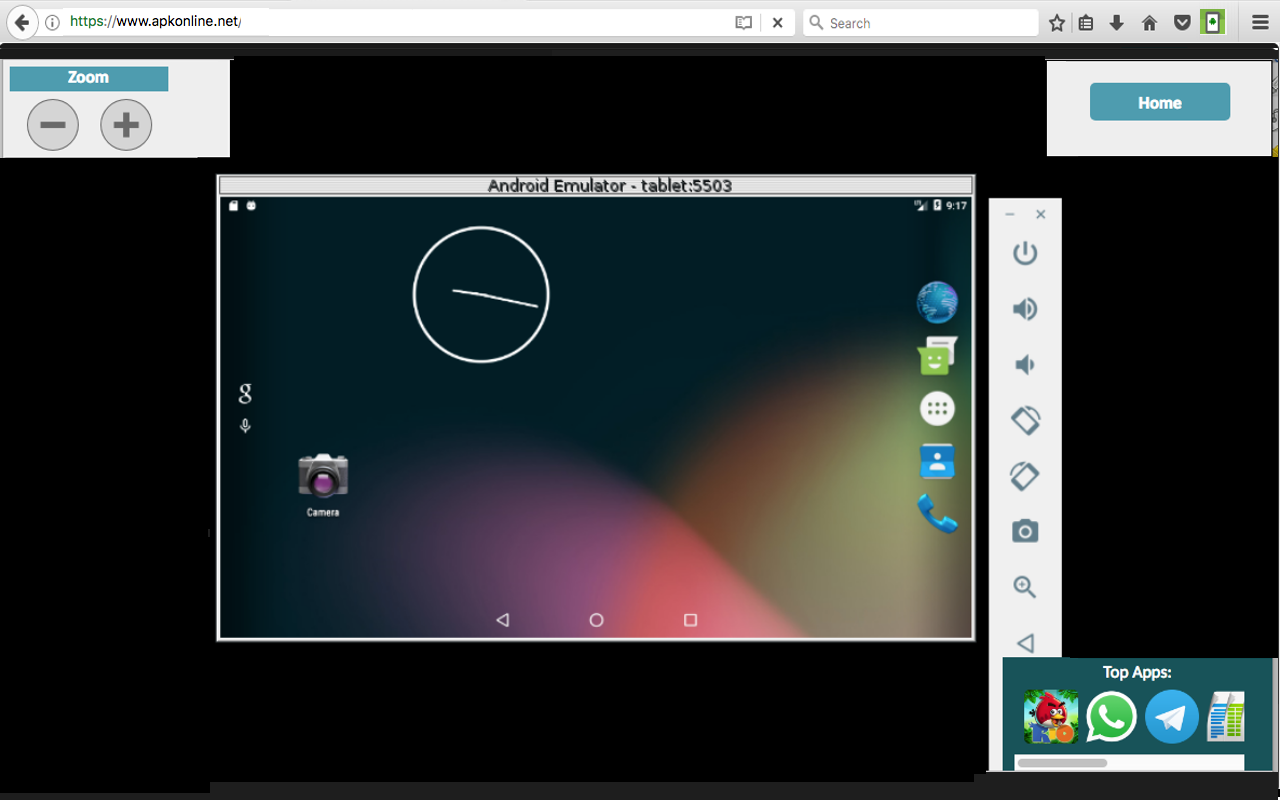
ApkOnline is a fully free, no-signup browser emulator for quick APK testing. Upload an APK (typically under ~100 MB) and it boots the app in an Android 7–10 image right in the tab. It's rougher than Appetize.io but genuinely free with no account.
Best for: Throwaway "does this APK even launch?" checks without creating an account.
Browserling — instant throwaway sessions
Browserling runs a free online Android emulator at browserling.com/android — no downloads, no installs, no setup. Free sessions are short and time-boxed, which is exactly what you want for a fast look at how an app or mobile web page behaves.
Best for: Instant, disposable browser sessions with nothing to configure.
Redfinger — a 24/7 cloud phone
Redfinger is a cloud-phone service: your Android device stays running on the server 24/7 even after you close the browser tab. That suits AFK gaming, background automation, and multi-account social workflows where you need the device to keep going. It's freemium — a free device is available, with paid tiers for more devices and higher specs.
Best for: Always-on Android in the cloud without keeping your own machine running.
BrowserStack App Live — professional QA
BrowserStack App Live streams real Android devices (not just emulators) to your browser for cross-device manual testing. It's a paid product with a free trial, aimed at QA teams who need to reproduce a bug on a specific phone model.
Best for: Professional QA that needs a wide matrix of real devices on demand.
Best free Android emulators to download in 2026
If you want maximum performance and unmetered use, a downloaded emulator wins. These are the actively-maintained free options for Windows, macOS, and Linux.
1. LDPlayer 9
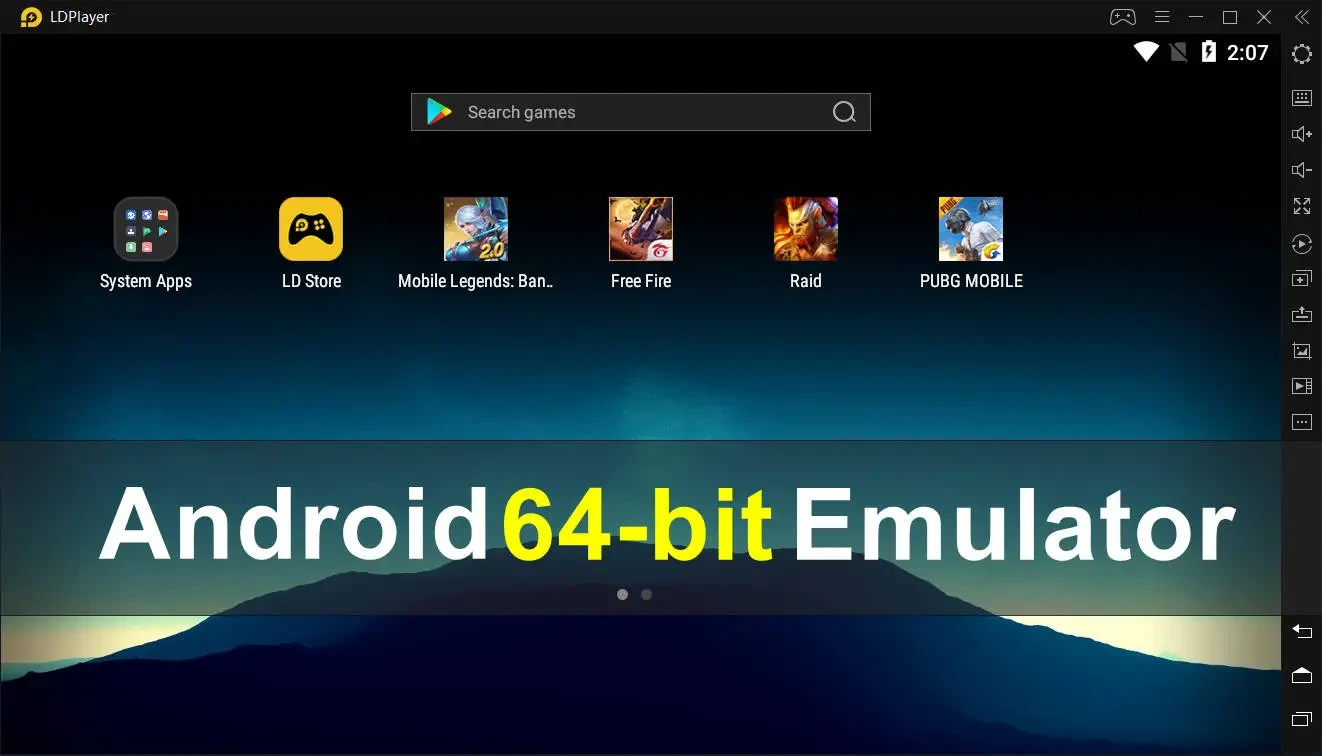
LDPlayer 9 (the 9.x branch is active throughout 2026) is the consensus pick for competitive mobile gaming on Windows. Hyper-V support, low input latency, and aggressive frame-pacing let it sustain high frame rates on hardware where BlueStacks and MEmu drop frames. Android 9 and Android 11 images are available, with Android 13 on the beta channel.
Key features:
- Per-instance CPU/RAM allocation
- Macro recorder + script editor for repetitive in-game actions
- Synchronizer for running the same input across multiple instances
- Built-in keymapping presets for popular titles
Trade-offs: Windows only. The installer bundles ads inside the LD Store; ignore those and install APKs directly.
Best for: PUBG Mobile, Call of Duty Mobile, Free Fire MAX, Mobile Legends — anything that benefits from low-latency keymapping.
2. BlueStacks 5.22
BlueStacks remains the most-installed consumer Android emulator on Windows and macOS. The current 5.22 build (updated through 2026) ships Android 11 stable and an Android 13 beta image, Hyper-V acceleration on Windows 11, and cloud-gaming integration. It's the most polished option for mainstream Play Store gaming.
Key features:
- Android 11 stable / Android 13 beta images
- Multi-instance manager with sync mode
- Eco Mode (caps frame rate to reduce CPU/GPU load)
- Native Google Play Store integration
- Hyper-V backend on Windows 11 (works alongside WSL2)
Trade-offs: Sponsored app recommendations and ads in the free build; some "Premium" features (cloud save, ad removal) require a subscription of around $4/month.
Best for: Mainstream gamers, Play Store apps, users who want a polished UI without Linux/dev tooling.
3. MuMu Player 12
Developed by NetEase, MuMu Player 12 tops 2026 AnTuTu charts (around 1.9M with Vulkan, edging out LDPlayer 9 and BlueStacks 5). NetEase advertises frame interpolation up to 240 FPS on a 240 Hz display — well above the 60 FPS cap most Android titles ship with. It uses Vulkan as its primary graphics API and offers multi-instance recording/playback.
Key features:
- Android 12 image with Vulkan rendering
- Frame interpolation up to a vendor-claimed 240 FPS
- Step-by-step recording and playback for repeatable in-game actions
- Free with no upsell paywall
Trade-offs: Newer project, smaller community than BlueStacks/LDPlayer; the Mac build lags the Windows one.
Best for: Gamers chasing high refresh rates and anyone who wants a free, ad-light alternative to BlueStacks.
4. Android Studio Emulator (AOSP)
The official Google emulator deserves a mention it usually doesn't get on consumer "best of" lists. It's the only emulator that ships day-one with the latest Android API level — currently API 35 (Android 15) plus the API 36 preview — and it integrates natively with Android Studio's debugger, profiler, and ADB tooling. It's also the only emulator suitable for filing bugs against Google.
Key features:
- System images for every API level Google still publishes (24 through 36)
- Snapshot/restore for fast cold-start workflows
- Hardware-accelerated graphics via Hypervisor.Framework (macOS) / WHPX (Windows) / KVM (Linux)
- Apple silicon arm64 images for native performance on M-series Macs
Trade-offs: Heavier than gaming-focused emulators; the UI is developer-oriented (no game macros or keymap presets).
Best for: App developers, anyone needing a current API level, anyone testing on Apple silicon.
5. Genymotion Desktop / Cloud
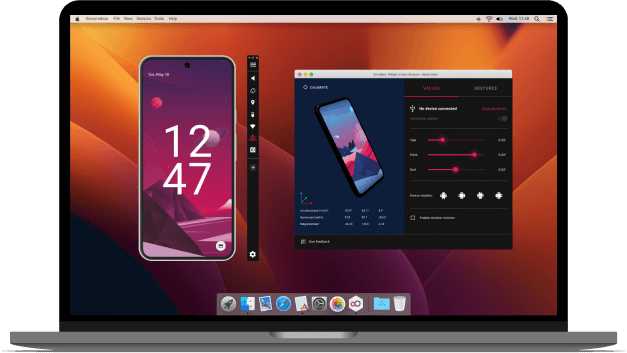
Genymotion is the developer-grade option. The Desktop free edition supports a wide range of Android versions for personal, non-commercial use; newer images and commercial use require a paid license. Genymotion Cloud spins up disposable virtual devices on AWS or via SaaS for parallel test runs in CI.
Pricing (check current rates before buying):
- Personal use (non-commercial): free, no support
- Student and indie/freelancer licenses billed per year, per machine
- Business / Cloud: usage-based; contact sales
Best for: QA engineers, mobile dev teams running automated UI tests, and anyone who needs a wide matrix of device profiles (Pixel, Galaxy, Nexus) without buying physical hardware.
6. NoxPlayer
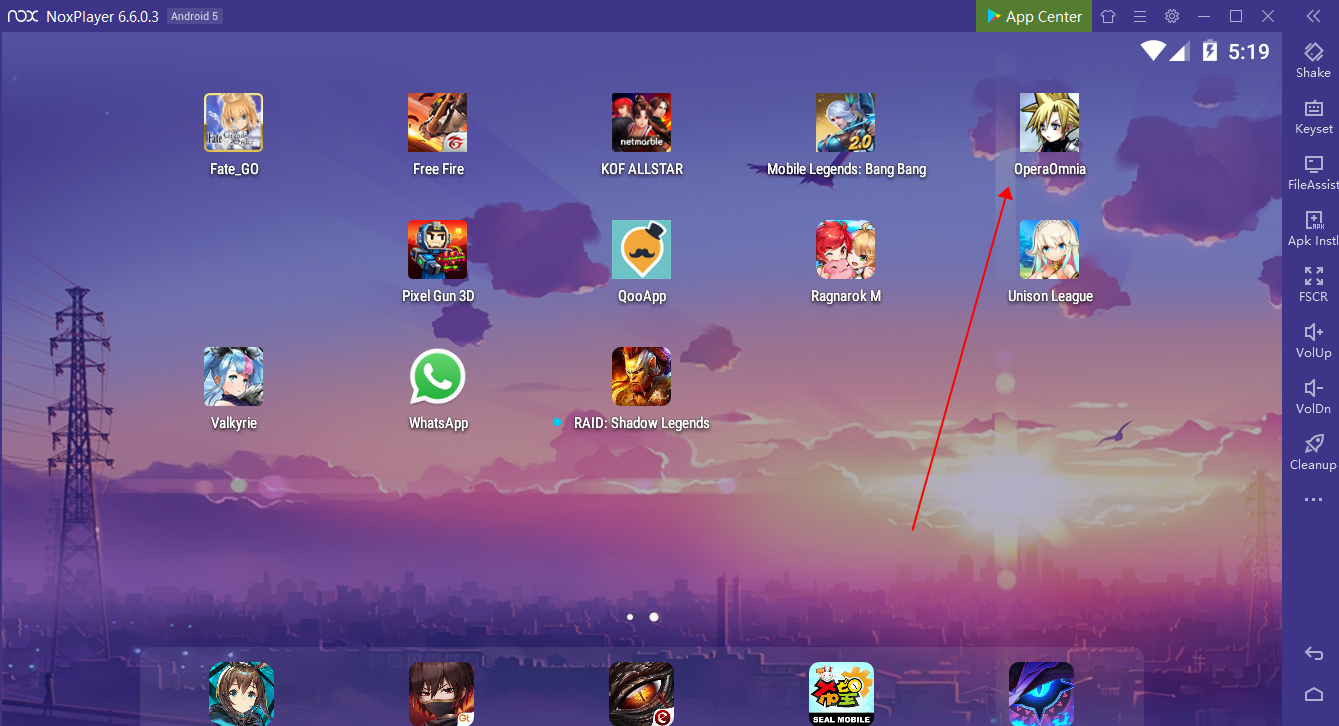
NoxPlayer is unique in shipping multiple Android kernels (4.4, 5.1, 7.1, 9, and 12) in a single installer. One-click switching via Multi-Drive is genuinely useful when you need to test an APK across Android versions without running Android Studio's emulator side-by-side.
Key features:
- Android 4.4 / 5.1 / 7.1 / 9 / 12 images bundled
- Multi-instance with shared file/clipboard mounts
- Macro recorder and script automation
- Virtual GPS / joystick emulation
Trade-offs: Update cadence has slowed compared to LDPlayer and BlueStacks; resource-intensive when running 3+ instances. Default ad pop-ups can be disabled in settings.
Best for: Running apps that target older Android versions (4.x / 5.x) without standing up a full AVD.
7. MEmu Play 9.2
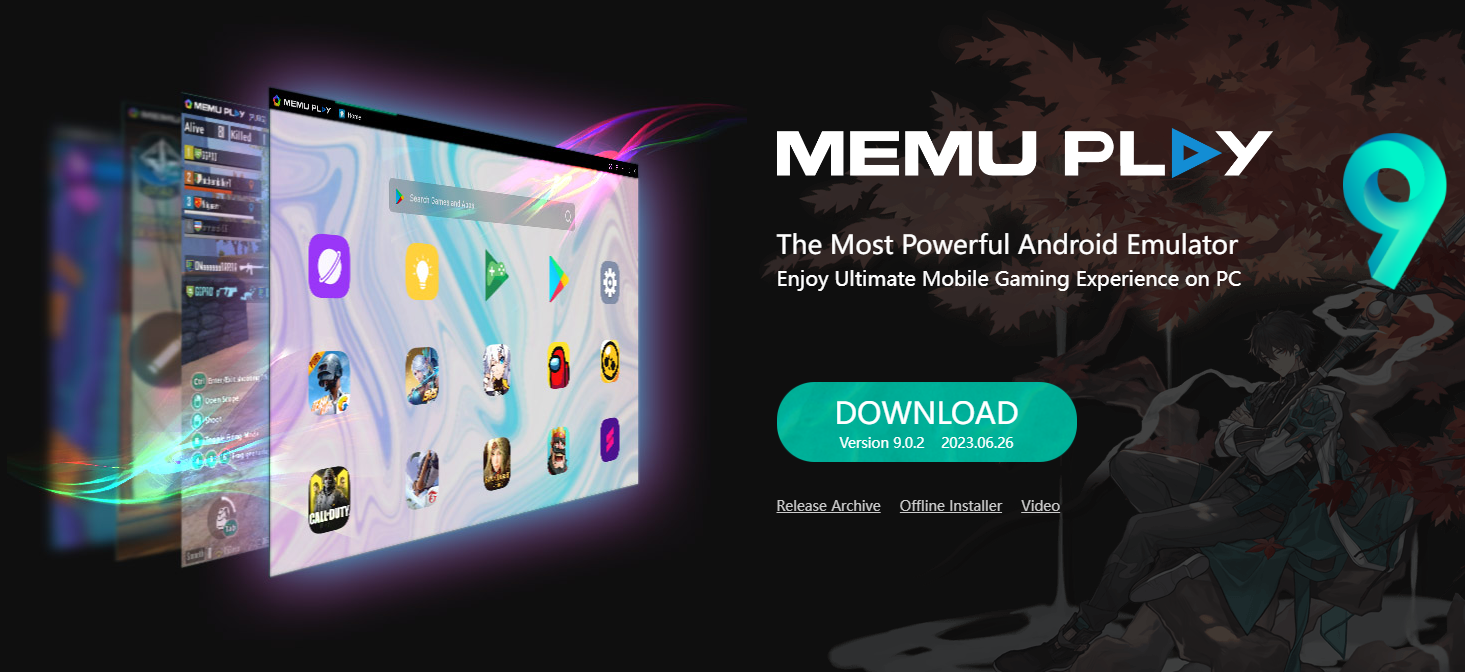
MEmu 9.2 added a native split-screen mode to its Android 12 image. It remains a solid middle-ground emulator: lighter than BlueStacks, more polished than NoxPlayer, with strong AMD CPU support that some competitors handle poorly.
Key features:
- Android 7.1, 9, and 12 images
- Split-screen and multi-window inside a single instance
- Drag-and-drop APK install and PC↔Android file transfer
- Strong AMD Ryzen performance
Trade-offs: Some advanced macros are gated behind MEmu Pro. Occasional sponsored install pop-ups.
Best for: AMD-based PCs, light gaming plus productivity (WhatsApp, Telegram, banking apps alongside a game).
8. Waydroid (Linux)
Waydroid is the modern Linux answer to running Android. It's technically a container, not an emulator — it boots a full Android image (LineageOS, Android 13) directly on the Linux kernel via LXC, giving near-native performance and direct hardware access. It has become the default way to run Android apps on Steam Deck and Linux desktops.
Key features:
- Container-based (no QEMU overhead)
- Single-window or multi-window mode on Wayland
- Works on Steam Deck, Ubuntu, Fedora, Arch
- Open source and actively developed
Trade-offs: Linux only. Initial setup needs some kernel modules and is not GUI-driven.
Best for: Linux users, Steam Deck owners, kiosk/digital-signage deployments running Android apps.
9. Bliss OS 18
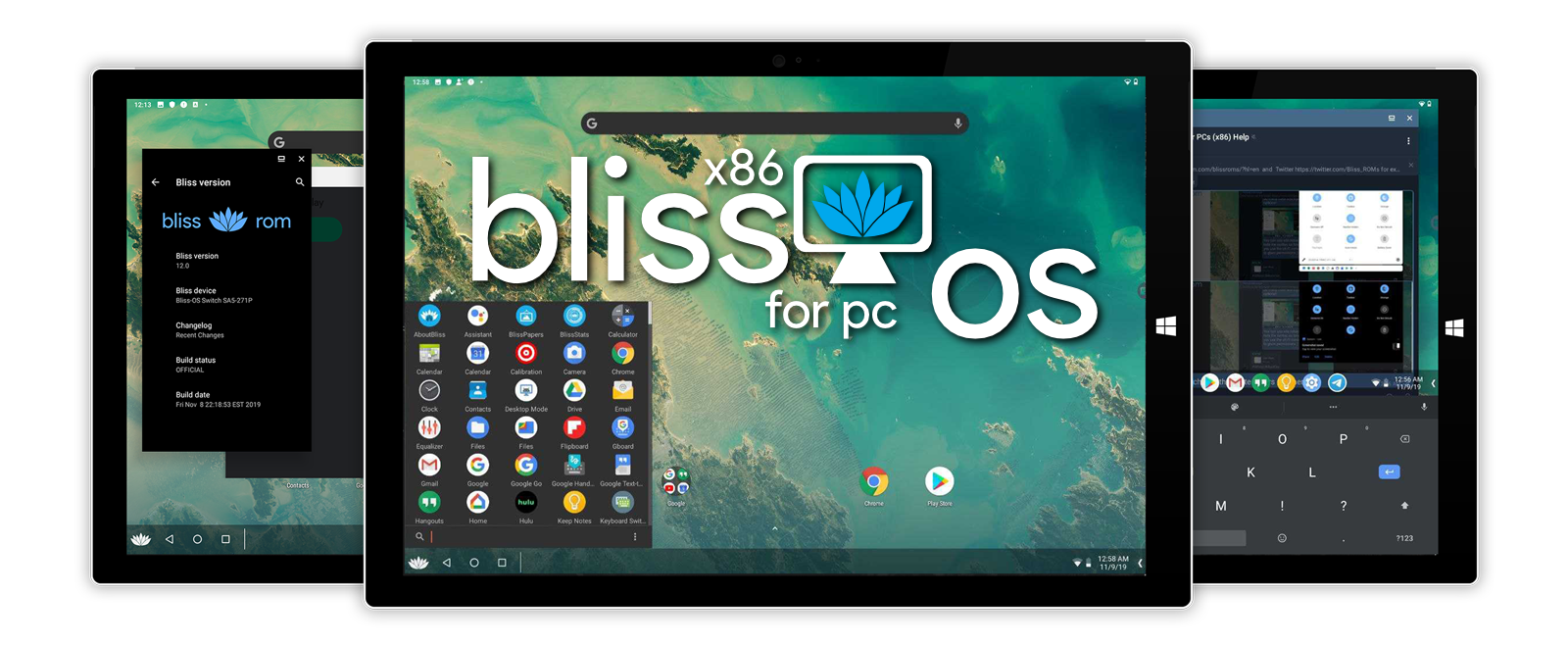
Bliss OS is not technically an emulator — it's a full Android distribution that installs on x86 hardware (or runs in a VM). It's the most actively maintained Android-x86 derivative now that the upstream Android-x86 project has gone dormant. Bliss OS 18 ships an Android 15 base; Bliss OS 17 (Android 14) and 16 (Android 13) remain supported.
Best for: Old laptops you want to repurpose as an Android tablet, ARM development boxes, anyone who wants Android as a daily-driver OS.
2026 comparison table (downloadable emulators)
| Emulator | Latest version | Android image | Platforms | Free tier | Best for |
|---|---|---|---|---|---|
| LDPlayer | LD9 (9.x) | 9 / 11 / 13 beta | Windows | Yes | Competitive gaming |
| BlueStacks | 5.22 | 11 stable / 13 beta | Windows, macOS | Yes (ad-supported) | Mainstream gaming |
| MuMu Player | 12 | 12 | Windows, macOS | Yes | High-FPS gaming, Vulkan |
| Android Studio Emulator | Bundled w/ Studio | 24–36 | Windows, macOS, Linux | Yes (Apache 2.0) | App development |
| Genymotion Desktop | 2026.x | Wide range; newer paid | Windows, macOS, Linux | Personal use only | QA, dev test matrix |
| NoxPlayer | 7.x | 4.4 / 5.1 / 7.1 / 9 / 12 | Windows, macOS | Yes | Multi-version testing |
| MEmu Play | 9.2 | 7.1 / 9 / 12 | Windows | Yes | AMD CPUs, productivity |
| Waydroid | 1.4.x | 13 (LineageOS) | Linux | Yes (open source) | Linux / Steam Deck |
| Bliss OS | 18 | 15 | x86 PC, VM | Yes (open source) | Native Android-as-OS |
Which Android emulators should you avoid in 2026?
If you read an older list and these names appear, treat the recommendation as out of date:
- Andy — abandoned; the original site was previously flagged for bundled cryptominers. Do not download.
- Droid4X — last official build is from 2016 (v0.11.7). Domains advertising "Droid4X 2026" are unofficial mirrors.
- KoPlayer — no updates since 2018; not safe to install on modern Windows.
- ARChon — required a deprecated Chrome packaged-app runtime that Google removed years ago. Use Waydroid or the Android Studio Emulator instead.
- YouWave — discontinued.
- Remix OS Player — Jide Technology shut down the Remix OS line; no security updates.
- PrimeOS — last major build was 2020-era; effectively dormant. Prefer Bliss OS for the same use case.
How do you choose an Android emulator in 2026?
By workload
- No-install / on a Chromebook: now.gg (gaming), Appetize.io or ApkOnline (testing)
- Casual gaming / Play Store apps: BlueStacks 5.22 or MuMu Player 12
- Competitive mobile gaming with keymapping: LDPlayer 9
- App development with debugger and profiler: Android Studio Emulator
- QA test matrix across many devices: Genymotion Cloud or BrowserStack App Live
- Linux desktop / Steam Deck: Waydroid
- Repurposing an old laptop: Bliss OS 18
By hardware
- Older PCs without virtualization (VT-x / AMD-V): See our guide to Android emulators that work without virtualization, or use a browser-based option so nothing runs locally.
- Apple silicon (M1/M2/M3/M4): Android Studio Emulator with arm64 images is the only first-party choice; BlueStacks Air is the consumer alternative.
- AMD Ryzen: MEmu and LDPlayer both have specific AMD virtualization paths and tend to outperform BlueStacks on these CPUs.
Safety checklist
- Download only from the vendor's official domain. Most "Android emulator 2026" search results are typo-squat mirrors.
- Check the most recent release date — anything older than 12 months is effectively unmaintained.
- For browser-based options, don't paste real credentials into a shared cloud device you don't control.
- Run any installer through VirusTotal if you have doubt; abandoned emulators have a long history of being repackaged with adware.
Bottom line
If you searched for an "online Android emulator," a browser-based option like now.gg, Appetize.io, or ApkOnline gets you running APKs in seconds with nothing installed. If you want maximum performance, download LDPlayer 9, BlueStacks 5.22, or MuMu Player 12 for gaming, or the Android Studio Emulator for development. Either way, stick to the maintained tools above — anything from the abandoned-tools list isn't just out of date, it's a security risk.
FAQ
What is the best free online Android emulator?
For casual gaming in the browser, now.gg is the strongest free option. For app testing, Appetize.io (100 free minutes/month) and ApkOnline (fully free, no account) are the best browser-based picks. All three run a real Android instance in the cloud, so nothing installs on your machine.
Can I run Android apps in a browser without downloading anything?
Yes. Services like now.gg, Appetize.io, ApkOnline, and Browserling stream a cloud Android device to your browser tab. You open a URL, upload or select an app, and interact with it live — no local install, which is ideal for Chromebooks and locked-down work laptops.
Is there a free Android emulator with no signup?
ApkOnline and Browserling let you run Android in the browser without creating an account. For downloadable emulators, LDPlayer, BlueStacks, MuMu Player, and NoxPlayer are all free to install, though some bundle ads or offer paid upgrades.
What is the best free Android emulator for a PC?
For gaming, LDPlayer 9 and MuMu Player 12 lead on performance, with BlueStacks 5.22 the most polished mainstream choice. For app development, the free Android Studio Emulator is the right default because it ships the latest Android API levels and integrates with the debugger and profiler.
Are online Android emulators safe?
Reputable browser-based emulators (now.gg, Appetize.io, BrowserStack) are safe to use, but treat any shared cloud device as untrusted: don't log into real personal accounts or paste sensitive credentials. For downloaded emulators, only install from the official vendor domain and avoid abandoned tools like Andy, Droid4X, and KoPlayer.
Which Android emulators should I avoid in 2026?
Avoid Andy, Droid4X, KoPlayer, ARChon, YouWave, Remix OS Player, and PrimeOS — none have shipped a maintained release in years, and some have a history of bundled adware or cryptominers. Use the actively-maintained emulators listed above instead.