
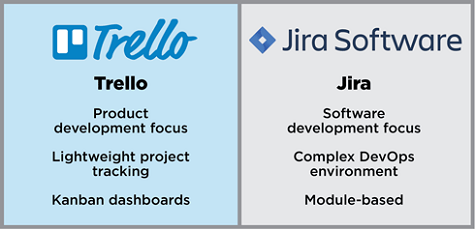
Trello and Jira get compared constantly because they sit at opposite ends of the same spectrum: both help teams track work, but one is a lightweight visual board and the other is a full software-development platform. Confusingly, both are now owned by the same company. Atlassian acquired Trello in 2017, so the modern decision is less "which vendor" and more "how much process does this team actually need." This guide compares the two from a developer's point of view, with current 2026 pricing and features.
What is Trello?
Trello is a Kanban-first visual task manager built around three simple objects: boards, lists, and cards. You drag cards between lists (for example, To Do → Doing → Done), assign members, add due dates, checklists, labels, and attachments, and that is essentially the whole model. The learning curve is measured in minutes, not days, which is why non-technical teams, freelancers, and small squads reach for it first.
Trello's power comes from its simplicity and its Power-Ups, add-ons that bolt on extra behaviour such as calendar views, GitHub links, or automation. It is cloud-hosted only and works well for anything from a personal to-do list to a marketing content calendar. What it deliberately does not do is impose structured engineering process on you.
What is Jira?
Jira is a project-management platform built specifically for software teams, though it has since expanded into general work management. Where Trello has cards, Jira has issues, and those issues are first-class objects with types (story, bug, task, epic, sub-task), story points, custom fields, and configurable workflows that model exactly how work moves through your team.
Jira ships Scrum and Kanban boards, backlogs, sprint planning, epics, releases (versions), and reporting such as burndown and velocity charts out of the box. It integrates tightly with the rest of the Atlassian stack, Bitbucket, Confluence, and Jira Product Discovery, and connects to GitHub, GitLab, and CI/CD tooling. The trade-off is complexity: issue types, workflow schemes, permission schemes, and board configuration all take time to learn. Atlassian streamlined the Jira UI through 2025-2026, but it is still a heavier tool than Trello by design.
Trello vs Jira: what's the core difference?
The single most useful way to frame the difference between Jira and Trello: Trello is a visual task manager that happens to support projects; Jira is a software-delivery platform that happens to include boards.
If your team just needs to see who is doing what and move cards across columns, Trello is the right amount of tool. The moment you need sprints, a groomed backlog, story-point estimation, linked bugs, or a report your engineering manager can trust, you have outgrown Trello and Jira starts to earn its complexity.
Trello vs Jira: feature comparison
| Capability | Trello | Jira |
|---|---|---|
| Core metaphor | Boards, lists, cards (Kanban) | Issues, sprints, epics, boards |
| Learning curve | Minutes | Steep (schemes, workflows) |
| Scrum / sprint planning | Via Power-Ups only | Built-in, first-class |
| Backlog management | No native backlog | Yes, native |
| Bug / issue tracking | Basic (cards) | Full issue types & linking |
| Custom workflows | Limited | Highly configurable |
| Reporting | Minimal | Burndown, velocity, control charts |
| Dev tool links (Git, CI/CD) | Via Power-Ups | Native (Bitbucket, GitHub, GitLab) |
| Integrations | 200+ Power-Ups | 3,000+ Marketplace apps |
| Hosting | Cloud only | Cloud + Data Center (self-managed) |
| Best for | Small / cross-functional teams | Engineering & enterprise teams |
How much do Trello and Jira cost in 2026?
Trello is meaningfully cheaper than Jira at every paid tier, roughly 37% less per seat on the entry paid plan. Both offer a usable free plan. Prices below are per user per month, billed annually, and can change, so confirm the current numbers on Atlassian's pricing pages before you commit a team.
| Plan | Trello | Jira |
|---|---|---|
| Free | Unlimited cards, up to 10 boards per workspace, 250 automation runs/mo | Up to 10 users, basic boards & backlog |
| Standard | ~$5 / user / mo | ~$7.91 / user / mo |
| Premium | ~$10 / user / mo | ~$15+ / user / mo |
| Enterprise | Custom | Custom |
For a small startup counting seats, Trello's free plan often covers the first year outright. For a growing engineering org, Jira's per-seat cost is usually a rounding error next to the process it enforces.
When should a developer choose Trello?
Reach for Trello when:
- The team is small, cross-functional, or non-technical and wants zero onboarding friction.
- You are running a side project, MVP, or content pipeline where a simple board is enough.
- You value speed and visual clarity over structured reporting.
- You do not yet need sprints, story points, or a formal backlog.
Trello is also a great personal or team planning surface. If you want an even lighter, no-signup board for tracking day-to-day work or coordinating multiple coding-agent sessions, Codersera's free AI Agent Task Board and Todo Tracker cover that use case in the browser.
When should a developer choose Jira?
Reach for Jira when:
- You run Scrum or Kanban with real sprints, estimates, and velocity tracking.
- You need a groomed backlog, epics, and releases as first-class concepts.
- Bug tracking, issue linking, and audit-friendly workflows matter.
- You want native links to Bitbucket, GitHub, GitLab, and CI/CD, plus deep reporting.
- You are scaling toward enterprise governance, permissions, and self-hosted (Data Center) options.
Most professional engineering teams end up on Jira for exactly these reasons. The complexity is the point: it exists so a 40-person org can move work predictably.
Can you use Trello and Jira together?
Yes, and because both are Atlassian products the path between them is smooth. A common pattern: cross-functional stakeholders live in Trello for lightweight planning while the engineering team runs delivery in Jira. Atlassian offers a two-way sync (available on the Atlassian Marketplace) that turns Trello cards into Jira issues and keeps updates flowing in both directions, so ideas captured on a Trello board land in the engineering backlog without manual re-entry.
This also makes migration low-risk. Teams often start on Trello, then graduate to Jira once process demands grow, importing existing boards rather than starting from scratch.
Trello vs Jira for developer teams: the verdict
There is no universal winner, only a fit. Choose Trello for simplicity, speed, and cross-functional visibility. Choose Jira for engineering rigour, sprint-based delivery, and reporting your leadership will trust. If you are unsure, start on Trello and let the pain of missing features tell you when it is time to move to Jira, then use Atlassian's sync so the switch costs you nothing.
Whichever tool you pick, the harder problem is usually the team behind the board. If you are scaling and need vetted remote developers who can plug into your existing Jira or Trello workflow quickly, Codersera helps you extend your engineering team with lower hiring risk.
FAQ
Is Trello or Jira better for software development?
Jira is better for software development. It was purpose-built for engineering teams and includes sprints, epics, story points, bug tracking, custom workflows, and reporting that Trello does not offer natively. Trello is better for small, simple, or non-technical projects where a fast visual board is enough.
Is Trello owned by the same company as Jira?
Yes. Atlassian, which makes Jira, acquired Trello in 2017. Both are now Atlassian products, which is why they integrate closely and why you can sync Trello cards into Jira issues.
Is Trello cheaper than Jira?
Yes. Trello's Standard plan is roughly 37% cheaper per seat than Jira's Standard plan (about $5 vs $7.91 per user per month billed annually in 2026). Both also offer a free plan, though Trello's free tier has no user cap while Jira's free tier is capped at 10 users.
Can Trello handle Scrum and sprints like Jira?
Not natively. Trello is Kanban-first and only approximates Scrum through Power-Ups. Jira ships Scrum boards, sprint planning, backlogs, and velocity reporting as built-in features, so teams running formal sprints are far better served by Jira.
Can you migrate from Trello to Jira?
Yes. Because both are Atlassian tools, you can import Trello boards into Jira and use a two-way sync from the Atlassian Marketplace to convert Trello cards into Jira issues, making it easy to graduate from Trello to Jira as your process needs grow.