
Offshore software development means building your software with an engineering team based in another country. Instead of hiring locally, you contract developers in a lower-cost or talent-rich region — India, Poland, Ukraine, the Philippines, Brazil, Vietnam — and run the project remotely. Done well, it lets a small company ship like a bigger one. Done badly, it turns into rework, missed deadlines, and a codebase nobody wants to inherit.
This guide explains what offshore development actually is, how it differs from nearshore and onshore, what it costs in 2026, the real pros and cons, and a practical checklist for choosing a partner that delivers. If you'd rather skip the search and work with pre-vetted engineers, Codersera can help you hire remote developers on a risk-free trial.
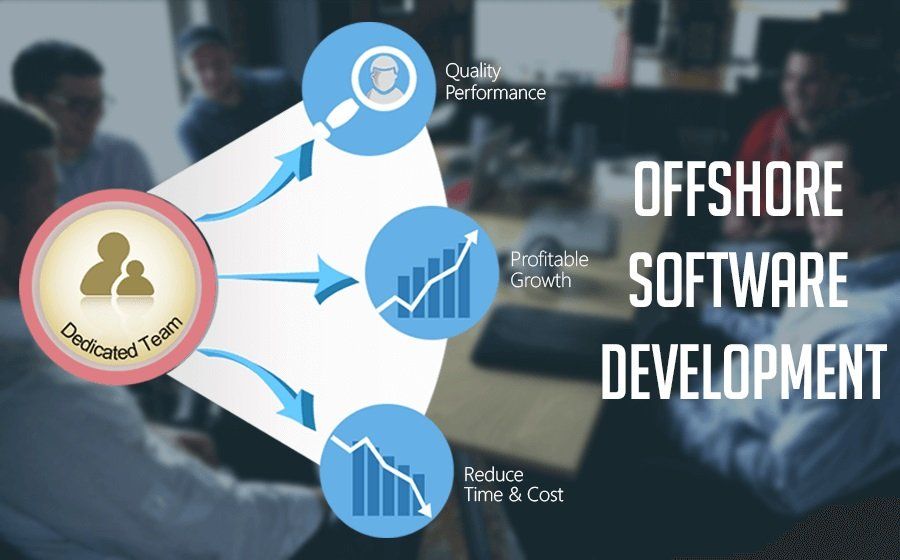
What is offshore software development?
Offshore software development is a form of software engineering outsourcing where the delivery team sits in a different country — usually one where engineering talent is more available or less expensive than in your home market. The work can cover the full lifecycle: product design, coding, QA and testing, DevOps, cloud infrastructure, data engineering, and increasingly AI and machine-learning features.
Two things make it "offshore" rather than plain outsourcing: geographic distance (a different country, often a different continent) and a time-zone gap you have to manage deliberately. That gap used to be the biggest objection. It isn't anymore — modern async tools, shared documentation, CI/CD pipelines, and a small daily overlap window make distributed delivery routine. The offshore market is now large and growing at low-double-digit CAGR, comfortably past $150 billion and climbing, because distributed teams have become a normal way to build software rather than a cost-cutting exception.
Offshore vs nearshore vs onshore: what's the difference?
All three are outsourcing models. The difference is distance and time-zone overlap:
| Model | Where the team sits | Time-zone overlap | Typical cost |
|---|---|---|---|
| Onshore | Same country as you | Full | Highest |
| Nearshore | A nearby country / similar time zone (e.g. US ↔ Latin America) | High | Medium |
| Offshore | A distant country / large time-zone gap (e.g. US ↔ India) | Low to partial | Lowest |
Offshore gives you the widest talent pool and the lowest rates but demands the most communication discipline. Nearshore trades some of that saving for easier real-time collaboration. Many teams end up blended — a nearshore lead or product owner working alongside an offshore build team.
How much does offshore software development cost in 2026?
Hourly rates vary widely by region. Rough 2026 ranges:
| Region | Typical hourly rate (2026) |
|---|---|
| South & Southeast Asia (India, Vietnam, Philippines) | $20–$50 |
| Eastern Europe (Poland, Ukraine, Romania) | $35–$70 |
| Latin America | $25–$75 |
| Western Europe | $60–$140 |
| North America | $80–$200+ |
Two caveats matter more than the headline number. First, rates are rising: with senior engineers in short supply, mid-level and senior offshore rates are expected to climb a few percent in 2026, even in traditionally low-cost markets. Generic development is commoditising while specialised skills hold a premium. Second — and this is the number most cost comparisons miss — the true loaded cost of offshore work tends to land at roughly 1.4x to 1.8x the quoted rate once you price in ramp-up, management overhead, code review, and attrition. Offshore is still meaningfully cheaper than a local hire, but budget for the loaded number, not the sticker.
What are the benefits of offshore development?
- Lower cost per engineer — often 40–60% below a comparable onshore hire, before overhead.
- Access to scarce skills — you're hiring from a global pool, not just your city.
- Faster scaling — spin a team up (or down) in weeks instead of running a months-long local hiring cycle.
- Follow-the-sun coverage — a time-zone gap becomes an advantage for support, QA, and overnight builds.
- Focus — your core team stays on product and strategy while the offshore team handles delivery.
What are the risks of offshore development?
- Communication friction — low overlap and async handoffs can slow decisions if you don't set a cadence.
- Technical-fit gaps — an impressive CV isn't proof of skill; unvetted hires are the top source of rework.
- IP and data security — unclear ownership terms and weak repo controls create real legal exposure.
- Quality variance — without documented standards and code review, output drifts.
- Attrition — churn on the vendor side can reset your project's context.
None of these are dealbreakers. Every one has a standard mitigation, covered below.
How do you choose an offshore development partner?
Before you sign anything, do the groundwork and pressure-test the partner:
- Write the spec first. Document scope, milestones, and quality standards. Know your user story, your must-have features, and any compliance requirements (data privacy, payments) before you brief anyone.
- Vet technical fit with a paid trial. Don't hire on interviews alone. A short paid trial on real work is the single best predictor of performance — it's why Codersera runs a risk-free trial rather than asking you to commit blind.
- Fix quality standards in writing. Agree architecture and code standards up front, share them with the team, and run regular code reviews and audits.
- Lock IP and confidentiality. Sign NDAs and clear IP-assignment terms before work starts, and set up a private repo (GitHub, GitLab, Bitbucket) you control.
- Set milestone-based contracts. Pay against agreed deliverables, not open-ended hours. It aligns incentives and caps risk.
- Run a real communication cadence. A daily async standup, a scheduled overlap window, and weekly two-way reviews beat weekly status reports on their own.
Is offshore software development worth it?
For most companies, yes — provided you treat it as an extension of your team rather than a fire-and-forget handoff. The cost advantage is real, the talent is real, and the tooling to run distributed teams is mature. What separates the wins from the horror stories is almost never the country or the rate; it's whether the engineers were properly vetted and whether scope, standards, and IP were nailed down before code was written. Get those right and offshore development is one of the highest-leverage ways to extend your engineering team and ship faster.
FAQ
What is offshore software development?
It's building your software with an engineering team based in another country — typically to lower cost, reach scarce skills, or gain time-zone coverage. You contract the team remotely and run the project through async tools with a scheduled overlap window.
Is offshore development the same as outsourcing?
Offshore development is a type of outsourcing. Outsourcing just means handing work to an external team; "offshore" specifically means that team sits in a different country with a meaningful time-zone gap, as opposed to nearshore (nearby) or onshore (same country).
How much does offshore software development cost?
Hourly rates in 2026 range from roughly $20–$50 in South and Southeast Asia to $35–$70 in Eastern Europe and $80–$200+ in North America. Budget for a loaded cost of about 1.4x–1.8x the quoted rate once management overhead and ramp-up are included.
Which countries are best for offshore development?
India, Poland, Ukraine, Vietnam, the Philippines, and Brazil are among the most common destinations, chosen for their talent depth, infrastructure, and rates. The "best" country depends on your budget, the skills you need, and how much time-zone overlap your workflow requires.
How do I reduce the risk of offshore development?
Vet engineers through a paid trial before committing, document scope and quality standards up front, sign NDAs and clear IP-assignment terms, use a private repo you control, and pay against milestones rather than open-ended hours.
Hire vetted remote developers with Codersera
Codersera is a global network of pre-vetted remote developers, engineers, and architects. Companies and startups use us to extend their engineering teams, hire faster, and lower hiring risk — with a risk-free trial so you can confirm technical fit before you commit. Hire remote developers with Codersera or learn more about how we work.