Last updated April 2026 — refreshed for current vendor pricing, Android 16 support, and 2026 cloud-emulator landscape.
Online Android emulators stream a virtualized device into your browser, eliminating local SDK setup, hypervisor headaches, and physical-device closets. This guide compares the cloud platforms developers and QA teams actually use in 2026 — with current pricing, real-device counts, and concrete buying criteria for each tier.
For desktop-grade emulators that run locally without virtualization, see our comprehensive guide to the best Android emulators for PC.
Want the full picture? Read our continuously-updated Android Emulators Complete Guide (2026) — BlueStacks, NoxPlayer, MEmu, AVD, and picks for dev and gaming.
What changed in 2026
- Android 16 is the dominant target. As of March 2026, ~21.6% of active Android devices run Android 16 (codename "Baklava"); Android 17 ("Cinnamon Bun") is on track for stable release around June 2026. Every credible cloud emulator now ships Android 16 images, and Genymotion/BrowserStack already preview Android 17 betas.
- Pricing crept up across the board. Genymotion SaaS moved from $0.05 to $0.06 per device-minute. Appetize replaced its old $40 tier with Starter ($59/mo) and Premium ($319/mo). LambdaTest paid plans now start at $19/mo (rebranded as TestMu AI in January 2026). Sauce Labs Live Testing starts at $39/mo, with Real Device Cloud at $199/mo.
- LambdaTest is now TestMu AI. Same product, same URL, AI-native test authoring layered on top.
- Firebase Test Lab pricing is unchanged: $1/hour for virtual devices, $5/hour for physical, with 60 free virtual minutes/day on Blaze.
- Discontinued: NoxPlayer Cloud never reached general availability and has been quietly shelved. TestObject (folded into Sauce Labs) is no longer marketed as a separate product.
TL;DR — which emulator should you pick
| Use case | Best fit (2026) | Starting price |
|---|---|---|
| One-off APK demo in a browser | ApkOnline (free) or Appetize Free tier | $0 |
| Embed an emulator in marketing/docs | Appetize.io Starter | $59/mo |
| Solo dev / small team manual testing | BrowserStack App Live (Individual) | $39/mo |
| Affordable parallel automation | TestMu AI (LambdaTest) | $19/mo |
| Pay-per-use, scriptable VMs | Genymotion SaaS | $0.06/min/device |
| CI integration with $1/hr emulators | Firebase Test Lab | ~$1/hr virtual |
| Enterprise scale (1000+ devices) | Sauce Labs or BrowserStack Enterprise | $199+/mo |
Top online Android emulator platforms in 2026
1. BrowserStack App Live
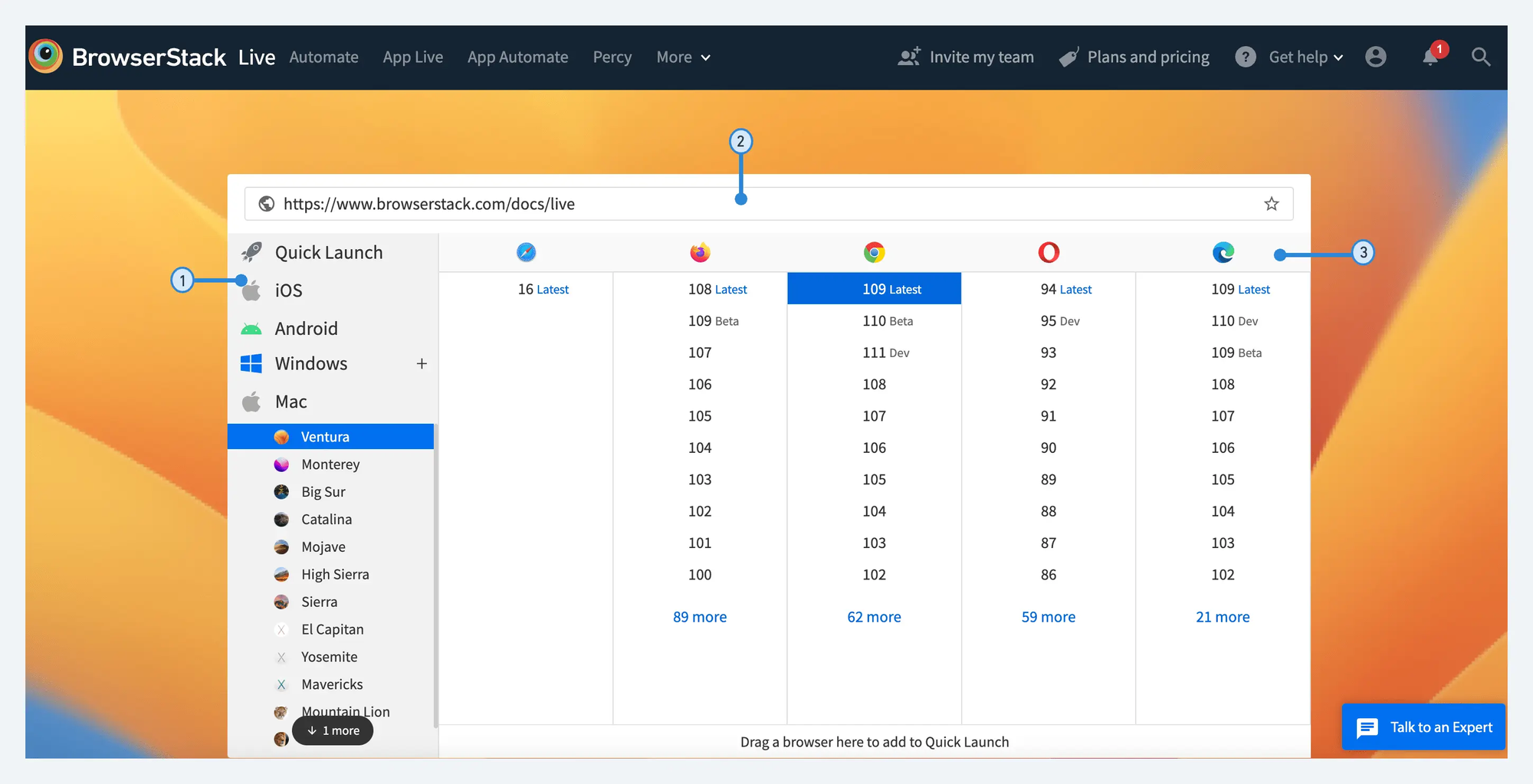
BrowserStack remains the default reach-for choice for manual app testing. App Live streams real Android devices (not pure emulators) directly into the browser, with the largest physical device pool on the market — over 3,500 devices spanning Android 4.4 through Android 16.
Key features
- Real-device cloud with Android 16 / iOS 26 coverage and a deep legacy back-catalog.
- Live manual testing plus App Automate (Appium, Espresso, XCUITest) for parallel runs.
- Network throttling profiles, geolocation injection, biometric auth simulation.
- CI integrations: Jenkins, GitHub Actions, GitLab, CircleCI, Bitrise, Azure DevOps.
- SOC2 Type II, GDPR, HIPAA-ready enterprise tier.
Pricing (April 2026)
- Individual: $39/mo (or $29/mo billed annually) — single user, unlimited app testing.
- Team: from $39/user/mo with parallel session limits.
- Business: $99–$149/user/mo with debug logs, geolocation, additional parallels.
- Enterprise: custom; dedicated devices, SSO, audit logs.
Best for: Mid-to-large teams that need real-device fidelity over cheap emulator minutes.
2. Appetize.io
Appetize is the only platform whose primary positioning is embeddable emulators — drop an iframe into your docs, sales pitch, or app-review portal and visitors interact with a real Android session in their browser. It is not a QA-at-scale tool; it is a demo and onboarding tool.
Key features
- Drag-and-drop APK / IPA upload, no SDK required.
- Embeddable iframe with brandable themes (Premium / Enterprise).
- REST API for programmatic session creation and tear-down.
- Concurrent-session and metered-minutes billing models.
- Android 14, 15, and 16 device profiles available.
Pricing (April 2026)
- Free: $0 — limited monthly minutes, public sessions only.
- Starter: $59/mo — included minute pack plus per-minute overage.
- Premium: $319/mo — concurrent sessions, white-label embeds.
- Enterprise: custom — dedicated capacity, SSO, audit.
Best for: Product marketing teams, SDK vendors, and educators who need a frictionless "click here to try it" flow.
3. Genymotion Cloud (SaaS)
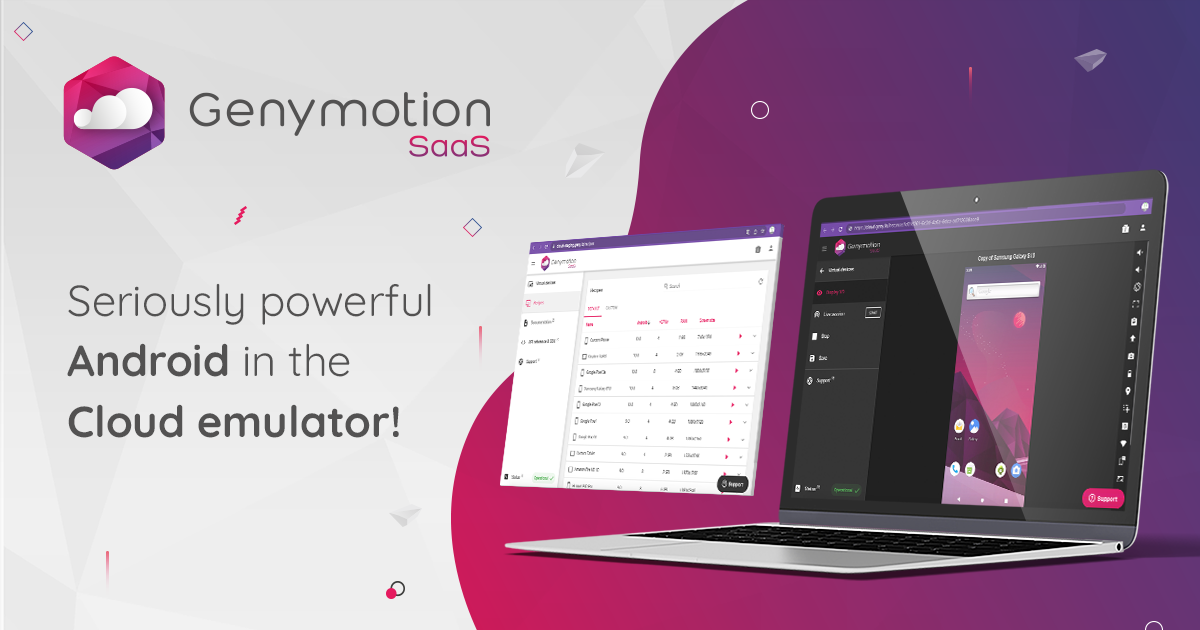
Genymotion remains the developer-favorite for scriptable Android VMs. The Cloud SaaS edition runs OpenGL-accelerated Android instances on Genymotion-hosted infrastructure; AWS, GCP, and Azure marketplace AMIs let you keep traffic inside your own VPC.
Key features
- Android 4.4 → Android 16 images, x86_64 architecture.
- ADB, gRPC, and Java/Python SDK access for full automation.
- Sensor injection: GPS, accelerometer, camera frames, battery, network type.
- Multi-instance: launch hundreds of devices simultaneously for sharded test runs.
- Native Appium, Espresso, and Detox compatibility.
Pricing (April 2026)
- Pay-as-you-go: $0.06 per device-minute, billed weekly when usage exceeds $150.
- Standard (flat): monthly subscription with unlimited 24/7 usage on a fixed instance count.
- Premium / Enterprise: dedicated infrastructure, SLA, VIP support — quoted.
- Cloud-marketplace AMIs (AWS/GCP/Azure) bill at provider rates plus a small Genymotion license fee.
Best for: Engineers who want emulators as cattle, not pets — fully automated runs orchestrated from CI.
4. TestMu AI (formerly LambdaTest)
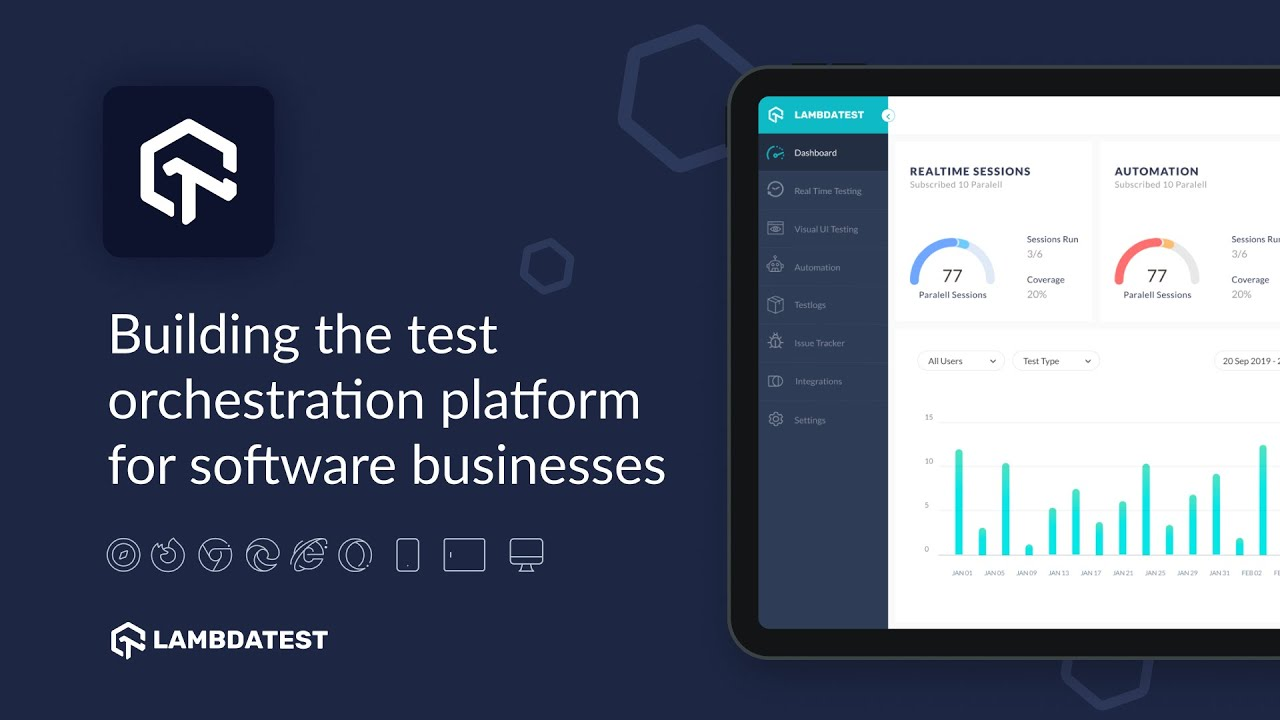
LambdaTest rebranded to TestMu AI in January 2026 to surface its AI-native test-authoring features (KaneAI, Test Manager, HyperExecute). The underlying real-device and emulator clouds are unchanged. It remains the price-per-parallel sweet spot for teams that don't need BrowserStack's real-device depth.
Key features
- Real Device Cloud + Android emulator pool, Android 7 → Android 16.
- AI-driven test generation (KaneAI) and visual regression diffing.
- HyperExecute parallel test grid — typically 30–50% faster than Appium-on-Selenium grids.
- CI integrations: GitHub Actions, GitLab CI, Bitbucket Pipelines, Jenkins, CircleCI.
- Freemium plan: 60 minutes/month, 2 concurrent live sessions.
Pricing (April 2026)
- Free: 60 min/mo, 2 live sessions.
- Live (manual): from $19/user/mo (annual).
- Web & Mobile Browser Automation: from $99/mo per parallel session.
- Real Device Plus: higher-tier plans with private device pools.
- A QA team using Real Device Plus + HyperExecute + KaneAI + Test Manager together typically lands above $650/seat/mo.
Best for: Cost-sensitive SMB QA teams that want AI-assisted authoring without enterprise contract math.
5. Sauce Labs
Sauce Labs leans hardest into enterprise automation. It runs a real-device cloud of roughly 20,000 devices alongside virtual Android emulators and iOS simulators, with deep analytics and centralized test reporting.
Key features
- Always-on Android emulators for fast pre-merge feedback (cheap CI lane).
- Real Device Cloud (~20k devices) for release-blocking validation.
- Sauce Visual (AI visual testing), Sauce Performance, and Sauce Connect tunneling.
- Native Appium 2.x, Espresso, XCUITest, Cypress mobile, and Playwright support.
- Enterprise-grade RBAC, SSO/SAML, and SOC2 Type II.
Pricing (April 2026)
- Live Testing: from $39/mo.
- Virtual Cloud (emulators/simulators): from $149/mo.
- Real Device Cloud: from $199/mo.
- Enterprise: $3,000–$75,000+/year typical, depending on parallel capacity and device tier.
Best for: Enterprises with mature CI/CD pipelines and a non-trivial automation budget.
6. Firebase Test Lab (Google)
Firebase Test Lab is the cheapest credible CI option if you are already on Google Cloud. You don't get a slick browser interface for manual exploratory work — you push an APK + test APK and get back logs, screenshots, and a video.
Key features
- Robo test (crawler) and instrumentation tests (Espresso, UI Automator).
- Game Loop tests for Unity/Unreal titles.
- Native gcloud CLI / GitHub Actions integration; gradle
flankfor sharding. - Android 8 → Android 16 device matrix on virtual and physical hardware.
Pricing (April 2026)
- Spark (free): up to 10 virtual-device test runs/day, 5 physical-device runs/day.
- Blaze (pay-as-you-go): 60 free virtual-device minutes/day, then $1/hr virtual, $5/hr physical.
Best for: Android-only teams already on Firebase/GCP that want CI feedback for pennies per build.
7. Other notable options
ApkOnline.net
Free, browser-based emulator for quickly running an APK without an account. Good for sanity checks; no automation, no real device fidelity, and ad-supported.
AWS Device Farm
Amazon's mobile testing service. Pricing remains $0.17/device-minute on-demand (or $250/device-slot/month for unlimited). Useful if you need testing inside an AWS-only compliance boundary.
Microsoft App Center Test (sunset)
App Center Test was retired in March 2025 and is no longer available. Microsoft now points users to BrowserStack and Sauce Labs.
Platform comparison (April 2026)
| Platform | Real devices | Emulators | Starting price | Best for |
|---|---|---|---|---|
| BrowserStack App Live | 3,500+ | Yes | $39/mo | Manual real-device testing |
| Appetize.io | No | Yes (browser) | Free / $59/mo | Embedded demos |
| Genymotion Cloud | No | Yes (VMs) | $0.06/min | Scriptable CI fleets |
| TestMu AI (LambdaTest) | 5,000+ | Yes | $19/mo | SMB automation |
| Sauce Labs | ~20,000 | Yes | $39 / $149 / $199 mo | Enterprise QA |
| Firebase Test Lab | Limited | Yes | $1/hr (virtual) | Cheap CI for GCP shops |
| AWS Device Farm | Yes | Yes | $0.17/min | AWS-locked teams |
| ApkOnline | No | Yes | Free | Quick APK preview |
How online Android emulation works
A virtualized Android instance reproduces a device's CPU, GPU, RAM, sensors, and network stack on host hardware. Most modern cloud emulators stack three layers:
- Hypervisor: KVM on Linux hosts (Genymotion, Sauce, BrowserStack), HVF on macOS for iOS sims, or QEMU TCG when hardware acceleration is unavailable.
- Android system image: typically AOSP x86_64 builds. ARM-on-x86 translation (used by Google Play Games and AWS Graviton-based fleets) is increasingly common in 2026.
- Streaming layer: WebRTC or proprietary low-latency transports (BrowserStack's protocol, Genymotion's gRPC) deliver pixels and accept input events from the browser.
Real-device clouds (BrowserStack, Sauce, AWS Device Farm) skip the hypervisor — they wire physical phones into a USB hub farm and stream the actual screen via screencap/scrcpy-style protocols.
Why teams use cloud emulators
- Zero device closet: no procurement, no breakage, no shipping.
- Parallelism: run 100 shards in 5 minutes instead of 100 minutes serial.
- Reproducibility: snapshot a known-good state and reset between tests.
- Geo / network simulation: trivially A/B test on flaky 3G in São Paulo vs. fiber in Tokyo.
Where they fall short
- Sensor fidelity: emulated GPS and accelerometer data is scripted, not lived.
- GPU-bound games: certain Vulkan paths, ARM-specific shaders, or Play Integrity attestation may behave differently than on a physical Pixel or Galaxy.
- Latency: WebRTC streams add 40–120 ms; not suitable for competitive game QA.
- Cost slope: per-minute billing scales linearly — a poorly tuned CI matrix can blow a month's budget in a day.
Picking the right platform
Match the platform to the work:
- Building, not testing? Run Android Studio's local emulator on your laptop. It's free and faster than any cloud option for inner-loop development.
- Demoing an APK? Appetize Free or ApkOnline. Don't pay for what you only need once.
- Manual exploratory QA? BrowserStack App Live Individual is the lowest-friction commercial option.
- CI that needs to be cheap? Firebase Test Lab on Blaze or Genymotion pay-as-you-go.
- Enterprise compliance & analytics? Sauce Labs or BrowserStack Enterprise — TestMu AI if budget is tighter.