Codersera


14 min to read
Top 5 Search Marketing Trends Shaping the Future of SEO in 2026
Top 5 search marketing trends shaping SEO in 2026, from AI Overviews to zero‑click strategies, with simple, actionable steps for modern digital marketers

Search in 2026 is no longer just “10 blue links” and a few ads. It is an AI‑first experience where users expect direct answers, conversations, visuals, and fast actions without always visiting a website.
Google’s AI Overviews (previously SGE – Search Generative Experience) now show for a meaningful share of queries and are available in more than 100 countries, powered by Gemini-based models. AI Overviews and AI Mode turn Google Search into an intelligent assistant that summarizes information, plans trips, and answers complex questions in one place.
At the same time, independent data shows that almost 60% of Google searches end without any click, meaning users get what they need directly on the search results page. Visual search tools like Google Lens now handle tens of billions of queries each month and are among the fastest-growing types of search, especially among younger users.
In this world, traditional SEO alone is not enough. You must understand the new search experience and optimize for:
- AI-generated answers (AI Overviews / AI Mode)
- Voice and conversational queries
- Human “Experience” in E‑E‑A‑T
- Visual and multimodal search
- Zero‑click search behavior
The rest of this article explains each of these five trends in simple English, with practical steps you can start today.
Trend 1: AI‑Over‑Answers & SGE Optimization
Key Takeaways
- AI Overviews and AI Mode put AI answers above traditional organic links for many queries.
- Google still uses web content as the base for these AI summaries, so SEO is not dead – it is moving “one layer up.”
- You must optimize to be cited inside AI answers, not only to rank in classic blue links.
What Are AI Overviews and AI Mode?
AI Overviews are AI‑generated summaries that appear at the top of Google’s search results, combining information from multiple websites into one answer box. They were first tested as Search Generative Experience (SGE) and then rolled out broadly from May 2024, expanding to over 100 countries later that year.
By 2025, Google reported AI Overviews reaching well over a billion users, and then 1.5 billion users globally, showing their central role in search. AI Overviews sit above most organic results and show a short paragraph, bullets, and a row of cited websites that support the answer.
AI Mode (sometimes called AI Search Mode) goes further. It offers a separate tab where users can ask follow‑up questions, upload images, and get multi‑step planning help inside a conversational interface powered by Gemini 2.x and later models.
How AI Overviews Change SEO
In 2026, your page can succeed in three different ways on a single query:
- Be used as a source for an AI Overview.
- Be one of the links shown inside the AI answer box.
- Still rank in classic organic results below the AI block.
Studies in 2024–2025 showed that when a URL appears inside AI Overviews, it can sometimes receive more clicks than when it is just a normal blue link, because users treat these links as “recommended sources.” However, the total number of clicks available per search is under pressure because almost 60% of searches now end with no click at all.
This means your content strategy should answer two questions:
- “How can I become the best source for AI to summarize?”
- “How can I make my snippet attractive enough to win the limited clicks that remain?”
Old SEO vs New AI‑Answer SEO
| Aspect | Old “Blue Link” SEO | New AI‑Answer SEO (2026) |
|---|---|---|
| Main goal | Rank page in top 10 results | Be cited and quoted in AI Overviews / AI Mode answers |
| Content format | Single page per keyword | Topic clusters, structured answers, reusable snippets |
| Query type focus | Short keywords | Natural questions, long and complex prompts |
| Optimization target | Title, meta, on‑page SEO | Clear explanations, context, structured data, evidence |
| Measurement | Organic clicks & rankings | Presence in AI answers + downstream brand impact |
(The table is conceptual; no data source is required.)
Practical Optimization for AI Overviews
To increase your chances of being used in AI Overviews and AI Mode, focus on:
- Clear, structured answers to real questions
- Use H2/H3 headings that match conversational queries (“How does X work?”, “What is the best way to…?”).
- Start sections with 2–3 sentence summaries using simple language.
- Evidence‑backed, trustworthy content (E‑E‑A‑T, see Trend 3)
- Show real experience, data, and sources so that AI systems see your content as reliable.
- Add author bios and references for sensitive topics (finance, health, legal, etc.).
- Structured data and technical clarity
- Implement schema (FAQPage, HowTo, Product, Organization, Article) so Google can easily understand your entities and relationships.
- Use clean HTML, proper headings, and avoid heavy script‑only content that is hard for crawlers to parse.
- Topic clusters and deep coverage
- Build pillar pages and supporting articles to cover a topic fully (not just one keyword).
- This improves topical authority, which helps both classic rankings and AI answer selection.
Pro Tip: Treat every main article as if it must “teach” an AI model about a topic. If a junior marketer could learn the topic from your page alone, an AI system likely can too.
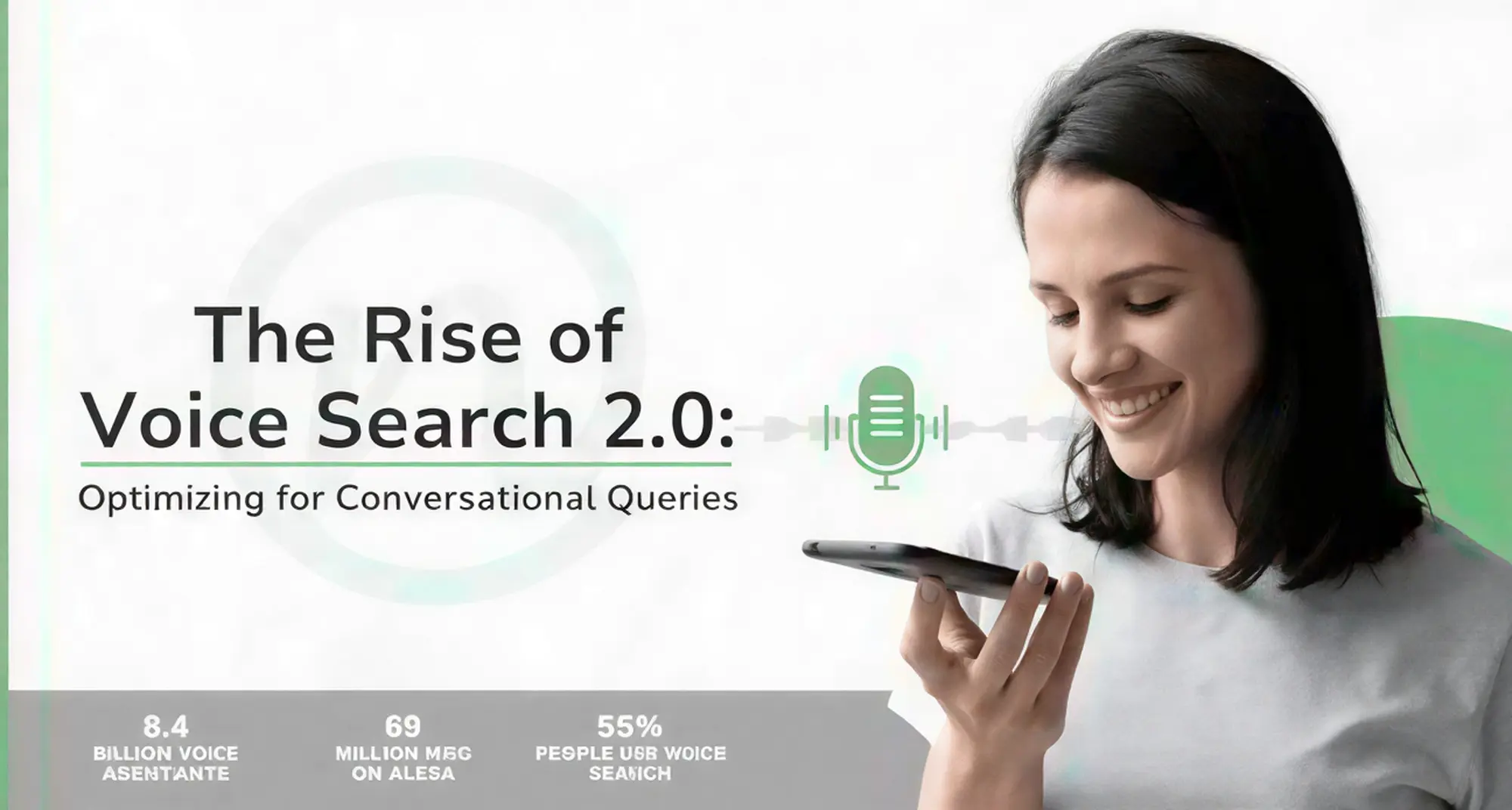
Trend 2: Voice & Conversational Search 2.0
Key Takeaways
- Voice search is evolving from short commands to full conversations powered by LLMs (large language models).
- Around 20–30% of consumers already use voice search regularly, and LLM chat plus voice is rising fast.
- Future‑ready SEO must support natural language questions, follow‑ups, and multi‑step tasks.
From “Voice Commands” to “Conversational Journeys”
In the early days, voice search meant basic actions like “Call Mom” or “What’s the weather?” These were single, short commands. Now, voice interfaces are integrated with advanced LLMs, turning them into conversational search engines where users can ask, clarify, and continue a dialogue.
Analysis suggests that by mid‑2020s, 20–30% of consumers use voice search regularly, especially for quick or local queries. At the same time, AI assistants like ChatGPT, Gemini, and others now handle hundreds of millions of search‑like queries per day, with forecasts that LLM search will keep growing strongly through 2030.
This shift is important: people are not just “searching” but “talking to” systems that synthesize results for them.
How LLMs Change the Way People Ask
LLM‑powered search (whether in Google, Bing, or standalone AI chatbots) encourages:
- Longer, more detailed questions
Example: “Plan a 5‑day trip to Manali for a family of four, vegetarian food, under ₹50,000, leaving from Delhi.” - Multi‑turn conversations
Users ask a follow‑up instead of starting a new search: “Make day 3 lighter, add a spa option.” - Context reuse
Assistants remember earlier parts of the conversation and adjust answers based on previous turns.
For SEO, this means you must think beyond “keyword density” and design content that answers complete tasks, not just individual questions.
Content Strategy for Conversational Search
- Write in natural, spoken language
- Use headings that look like questions people actually say.
- Answer in short paragraphs and bullets that can be read aloud easily.
- Cover full user journeys, not single steps
- Instead of only “What is local SEO?”, add sections like “How to start local SEO in 30 days” and “Checklist to audit your local presence.”
- This makes your content more useful for LLMs that are trying to solve the whole problem.
- Local and “near me” intent for voice
- Voice users often look for local services (restaurants, salons, clinics, repair shops).
- Ensure your Google Business Profile, reviews, accurate NAP (name, address, phone) data, and local schema are complete and optimized.
- Answer follow‑up questions inside your page
- Add FAQ sections with “People Also Ask”‑style questions.
- Use simple subheadings like “Is this expensive?”, “How long does it take?”, “Is this safe for beginners?”
Pro Tip: Read your important pages aloud. If the content sounds awkward or robotic, a voice assistant will also struggle to use it naturally.
Trend 3: The Rise of “Experience” in E‑E‑A‑T
Key Takeaways
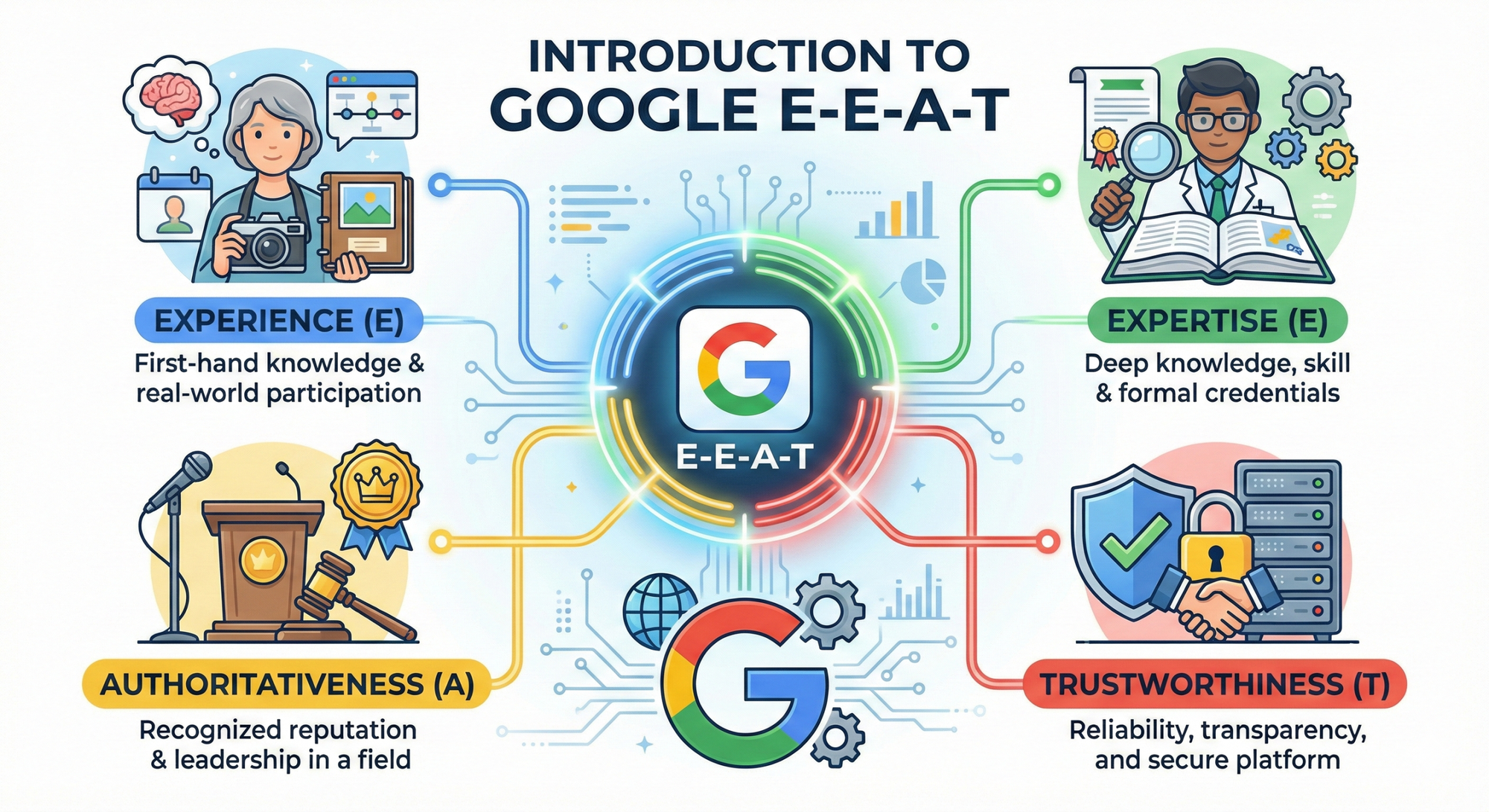
- E‑E‑A‑T = Experience, Expertise, Authoritativeness, Trustworthiness – the quality framework Google uses in its rater guidelines.
- With AI‑generated content everywhere, Google puts more weight on first‑hand, real‑world experience.
- Sites that show clear experience, expert authors, and trust signals gain better rankings and AI Overview visibility.
What “Experience” Really Means in 2026
Google’s documentation and quality rater guidelines emphasize that good content is created primarily for people and shows real experience when relevant. “Experience” means the author or brand actually did the thing they describe: used the product, ran the campaign, visited the place, or treated the patient.
Updated guides in 2024–2026 make it clear that E‑E‑A‑T is considered for all queries and is especially important in “Your Money or Your Life” areas like health, finance, safety, and law. Agencies, consultants, and brands are increasingly advised to show first‑hand case studies, data, and stories rather than generic AI‑written summaries.
In short: generic AI content alone will not win competitive SERPs. You need human fingerprints.
Why Human Perspective Beats AI‑Only Content
Several 2025–2026 SEO guides note that Google now prioritizes:
- Firsthand experience
- Verified expertise
- Strong brand authority
- Transparent, trustworthy websites
Websites that lack these signals may face unstable rankings, weaker visibility in AI Overviews, and lower trust from users. On the other hand, strong E‑E‑A‑T can drive higher rankings, more AI citations, and better conversions because users feel safer.
This is especially true in the era of AI Overviews: when Google decides which sources to show inside an AI answer, it prefers sites that look credible and experienced.
How to Build Experience into Your Content
- Add real stories and proof
- Share campaign screenshots, step‑by‑step breakdowns, and actual numbers where possible.
- Use first‑person language (“we tested,” “in our project,” “our client saw…”) when you truly did the work.
- Publish case studies and success/failure reports
- Turn client work, experiments, or internal projects into structured case study pages.
- Include problem, process, tools used, results, and lessons learned.
- Show expert authors and reviewers
- Add author bios with qualifications, certifications, and roles.
- For sensitive verticals, use expert reviewers (doctors, lawyers, certified professionals) and show their names.
- Strengthen trust and transparency on the site level
- Use HTTPS, clear contact information, privacy policy, refund/return policies, and up‑to‑date timestamps.
- Cite your sources and link to authorities when you reference data or studies.
Pro Tip: Do not delete all your AI‑generated drafts. Use AI for speed, but always add human editing, your own perspective, and specific data before hitting publish.
Trend 4: Visual & Multimodal Search (Lens, Video, Images)
Key Takeaways
- Visual searches (searching with images or camera) are growing extremely fast, and Google Lens alone handles around 20 billion monthly searches.
- Google reports that Lens queries are one of the fastest‑growing query types, with strong use among younger users.
- In 2025, Google also stated that visual searches globally grew around 70% year‑over‑year, with India leading Lens adoption.
What Is Multimodal Search?
“Multimodal” means using more than one type of input – for example:
- Text + image (“What is this tool used for?” with a photo).
- Video + voice (talking to search while pointing your camera at a broken device).
- Circle‑to‑Search (drawing a circle on your screen to ask about part of an image).
Tools like Google Lens, Lens in AI Mode, and Circle to Search allow users to search by simply showing what they see, not just typing words. Google has said that Lens queries are strongly connected to its AI initiatives and are a key part of the future of Search.
Why Visual Search Matters for SEO
Data from Google and independent coverage shows:
- Google Lens handles nearly 20 billion visual searches per month, and about 20% of them are shopping‑related.
- Lens queries are among the fastest‑growing query types and are especially popular with users aged 18–24.
- Visual search usage increased by roughly 70% YoY in 2025, with India becoming the top country for Google Lens usage and one of the first markets to get advanced AI search features.
For brands, this means:
- Product discovery is shifting from keyword search to “show me this style, this item, this part.”
- Your images and videos now act as search entry points, not just decoration.
- Poor image SEO means losing visibility in a rapidly growing search mode.
How to Optimize for Visual and Multimodal Search
- High‑quality, descriptive images
- Use clear, original, high‑resolution images for products, services, and how‑to content.
- Avoid generic stock photos when possible.
- Image SEO basics (still very important)
- Descriptive file names (e.g.,
sony-wh-1000xm6-black-side-view.jpg). - Alt text that describes the object and use case in simple language.
- Relevant captions that match how people might describe the image.
- Descriptive file names (e.g.,
- Product and schema optimization
- Implement Product, Offer, and Review schema for e‑commerce so your products show rich info (price, availability, ratings).
- For tutorials, use HowTo and VideoObject schema to help Google understand step‑by‑step visuals.
- Video as a search surface
- Create short, focused videos that answer specific questions (“How to reset X”, “Best way to install Y”).
- Add chapters and clear on‑screen text to help both users and AI understand.
- Test visual search flows
- Use Google Lens on your own products (screenshots, packaging, lifestyle photos).
- See what results appear and fix missing metadata or on‑page issues.
Pro Tip: Think of every image as a mini landing page. Ask: “If this image is the first thing a user sees in search, do they know what it is, what it does, and why it matters?”
Trend 5: Zero‑Click Content Strategy
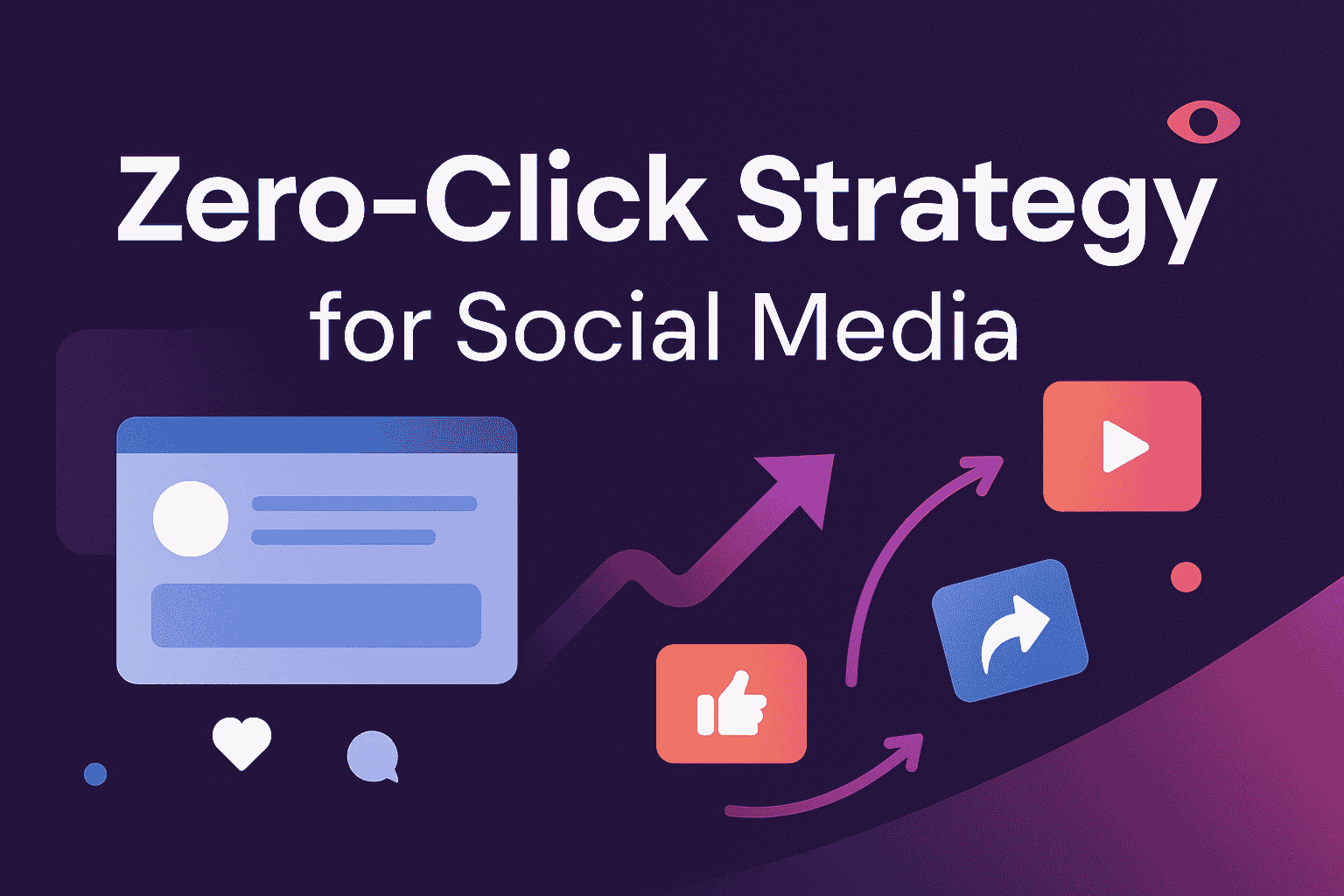
Key Takeaways
- Around 58–60% of Google searches in the US and EU now end with zero clicks.
- For every 1,000 Google searches in the US, only about 360 clicks go to non‑Google, non‑ad properties.
- You must build a strategy where brand awareness, trust, and assisted conversions matter even when users never visit your site.
Understanding Zero‑Click Search
A zero‑click search happens when a user does not click any result after searching. They may:
- Get the answer directly from a featured snippet, AI Overview, or knowledge panel.
- Refine their query and search again.
- End the session.
A large 2024 study using clickstream data from Datos (a Semrush company) found that 59.7% of EU Google searches and 58.5% of US Google searches resulted in zero clicks. Out of all clicks that do happen, only a minority go to the open web; many stay inside Google’s own properties or ad ecosystem.
This confirms what many SEOs feel: Google is becoming more of an “answer engine” than a pure “search and click” engine.
Why Zero‑Click Is Not Purely Bad
Zero‑click behavior can still help your business if:
- Users see your brand name, logo, or content snippet inside a featured result or AI answer.
- They later search for your brand directly or click a remarketing ad.
- They use another channel (email, social, direct) to contact you after seeing your expertise.
Think of it as impression‑first SEO: being visible and trusted, even if the click comes later or through another path.
How to Build a Zero‑Click Content Strategy
- Own “answer boxes” and featured positions
- Structure content with question‑and‑answer blocks.
- Aim for short, clear definitions that can appear in featured snippets or AI summaries.
- Strong branding on the SERP
- Use a consistent brand name in title tags and meta descriptions.
- Ensure your favicon, logo, and site name are correct in Google Search features.
- Supportive measurement model
- Do not judge SEO only by last‑click conversions.
- Track branded search growth, direct traffic, assisted conversions, and post‑view conversions from search.
- SERP‑native content formats
- FAQ sections to appear in “People Also Ask.”
- Short “explainers” that can be quoted inside AI Overviews.
- Local listings, product feeds, and knowledge panel optimization.
Pro Tip: Treat rankings that do not send clicks as top‑of‑funnel branding placements, similar to a TV ad or billboard. Report them as “search visibility” KPIs, not just traffic.
Action Plan: Step‑by‑Step SEO Roadmap for 2026
This section turns the five trends into a practical roadmap you can follow over the next 6–12 months.
Step 1: Audit Your Current Visibility in AI and Zero‑Click SERPs
- List your top 50–100 money keywords.
- Manually check each SERP in an incognito browser (and on mobile):
- Is there an AI Overview?
- Are you cited inside it?
- Are there featured snippets, People Also Ask, or video/image packs?
- Note which queries show strong zero‑click patterns (direct answers, large AI block, knowledge panels).
Step 2: Rebuild Content Around Questions, Not Just Keywords
- For each key topic, list the main user questions: “what,” “how,” “why,” “which,” “best,” “near me.”
- Build or update pillar pages that answer these questions clearly and in order.
- Add FAQs and short summaries at the top of each section to help AI and users quickly understand the answer.
Step 3: Add E‑E‑A‑T and Human Experience Signals
- Create or update author bios with experience, qualifications, and links to profiles.
- Add at least one case study or real example to your key service/product pages.
- Review site trust basics: HTTPS, clear contact, policies, and updated timestamps.
Step 4: Optimize Images, Videos, and Visual Search
- Audit your top images: rename files, add descriptive alt text and captions.
- Add Product/HowTo/Video schema where relevant.
- Test 5–10 of your products or articles with Google Lens and Circle to Search; fix what you see missing.
Step 5: Prepare for Voice and Conversational Search
- Rewrite key FAQs and intro paragraphs in simple, spoken‑style English.
- Add “complete journey” content – guides that take the user from problem to solution, not just explain concepts.
- Ensure local SEO basics (Google Business Profile, reviews, NAP consistency) are in place for any offline services.
Step 6: Update Measurement and Reporting
- Add branded search volume, direct traffic, and assisted conversions as KPIs, not just organic click volume.
- Track changes in:
- Featured snippet ownership
- AI Overview citations (manual tracking or tools)
- Visibility in image/video search and local packs
- Report these as “search visibility” metrics to stakeholders so they understand the new reality.
Pro Tip: Build a simple quarterly “SERP features” dashboard: how many of your keywords show AI Overviews, snippets, or visual packs, and how often you appear inside them.
Conclusion: SEO Is Becoming “Search Experience Optimization”
In 2026, SEO is no longer only about ranking pages. It is about shaping how your brand appears inside answers, conversations, and visuals across many search surfaces. AI Overviews, voice assistants, visual discovery, and zero‑click behavior all point to one direction: search is turning into a personal intelligence layer that helps users think, decide, and act in real time.
The brands that win will be those that:
- Provide deep, experienced, trustworthy content.
- Embrace AI‑driven SERP features instead of fighting them.
- Design for multi‑modal, conversational journeys.
- Measure success beyond last‑click traffic.
If you treat SEO as Search Experience Optimization – focusing on the user’s full journey across AI, voice, visual, and classic search – you will be ready for whatever 2027 and beyond bring.
FAQ: Top 5 Questions About SEO in 2026
1. Is SEO dead because of AI Overviews?
No. AI Overviews still depend heavily on websites as sources and show links that users can click for deeper information. What is changing is the position of value in the SERP: you must aim to be cited and trusted inside AI answers, not only ranked as a blue link.
2. How do I know if my site appears in AI Overviews?
Today, there is no perfect automated report, so the most reliable method is still manual checking. You can:
- Search your key queries in an incognito window (desktop and mobile).
- Look inside the AI Overview box for your domain name or favicon.
- Use rank‑tracking tools that are beginning to add AI Overview visibility reporting.
3. Should I stop using AI to write content?
You do not need to stop using AI, but you should stop publishing AI‑only, generic content. Google and many SEO experts recommend using AI for drafts and support, then adding human editing, first‑hand experience, and clear E‑E‑A‑T signals before publishing.
4. How important is visual search for B2B?
Visual search is critical in e‑commerce and consumer verticals, but it also matters in B2B when products are physical (hardware, machinery, tools, packaging). Data shows strong growth in visual searches globally and heavy usage among younger professionals who expect to “point and search.” For purely digital or abstract B2B products, focus more on diagrams, interface screenshots, and explainer videos that can appear in image and video search.
5. How can small businesses compete with big brands in this new world?
Small businesses can still compete by:
- Focusing on local and niche topics where they have deep real‑world experience.
- Publishing honest case studies and stories that big brands cannot easily copy.
- Optimizing Google Business Profile, reviews, and local schemas.
- Targeting long‑tail, conversational queries where large brands are often weak.
Google’s own guidelines say that E‑E‑A‑T is not only about big brands; it is about who is most helpful and trustworthy for the specific query.
🚀 Try Codersera Free for 7 Days
Connect with top remote developers instantly. No commitment, no risk.
Tags
Trending Blogs
Discover our most popular articles and guides
10 Best Emulators Without VT and Graphics Card: A Complete Guide for Low-End PCs
Running Android emulators on low-end PCs—especially those without Virtualization Technology (VT) or a dedicated graphics card—can be a challenge. Many popular emulators rely on hardware acceleration and virtualization to deliver smooth performance.

Android Emulator Online Browser Free
The demand for Android emulation has soared as users and developers seek flexible ways to run Android apps and games without a physical device. Online Android emulators, accessible directly through a web browser.
Free iPhone Emulators Online: A Comprehensive Guide
Discover the best free iPhone emulators that work online without downloads. Test iOS apps and games directly in your browser.
10 Best Android Emulators for PC Without Virtualization Technology (VT)
Top Android emulators optimized for gaming performance. Run mobile games smoothly on PC with these powerful emulators.
Gemma 3 vs Qwen 3: In-Depth Comparison of Two Leading Open-Source LLMs
The rapid evolution of large language models (LLMs) has brought forth a new generation of open-source AI models that are more powerful, efficient, and versatile than ever.
ApkOnline: The Android Online Emulator
ApkOnline is a cloud-based Android emulator that allows users to run Android apps and APK files directly from their web browsers, eliminating the need for physical devices or complex software installations.

Best Free Online Android Emulators
Choosing the right Android emulator can transform your experience—whether you're a gamer, developer, or just want to run your favorite mobile apps on a bigger screen.
Gemma 3 vs Qwen 3: In-Depth Comparison of Two Leading Open-Source LLMs
The rapid evolution of large language models (LLMs) has brought forth a new generation of open-source AI models that are more powerful, efficient, and versatile than ever.